
How Long Do Braces Take to Straighten Teeth?
By Dr. Namratha Umesh
Founder – Dental Conceptz
Everything You Need to Know
If you have been thinking about getting braces, the first question that almost always comes up is how long is
this actually going to take? And that is a completely fair question to ask before committing to any smile correction treatment. Nobody wants
to sign up for something without knowing what the journey looks like from start to finish.
The honest answer is that it depends. But before that sounds like a frustrating non-answer, let us walk through
exactly what it depends on, because once you understand the factors involved, you will have a much clearer
picture of what your own timeline might look like. Whether you are exploring braces for teeth alignment, dealing
with a jaw that does not sit quite right, or simply want a straighter smile before a big life event, this guide
covers everything you need to know in plain, simple language.
First, What Are Braces Actually Doing Inside Your Mouth?
When discussing time frames for orthodontic treatment, it would be useful for one to have an understanding of
what is going on behind the scenes as you wear your braces.
Your teeth are not anchored to the jawbone as most people believe; rather, they sit in a ligament that allows
your teeth to shift through the application of steady pressure. This is precisely how the use of wires and
brackets and in some cases rubber bands works.
As the tooth moves, the bone on one side of it breaks down slightly to allow movement, while new bone forms on
the other side to support the tooth in its new position. This process called bone remodeling, takes time because
biology simply cannot be rushed. The body needs to build real, stable bone around each repositioned tooth. That
is why orthodontic treatment is measured in months and years rather than days and weeks.
So, How Long Do Braces Actually Take?
It is the truth about the range: most patients take 12 months to 36 months to wear braces. Most of the time, this period lasts for 18 months to 24 months.
But that range is wide for a reason. A teenager with mild crowding and a still-developing jaw will respond very differently to treatment than an adult with significant spacing issues, a crossbite, and fully completed bone development. The variables matter and your orthodontist will assess each one carefully before giving you a personalised estimate at your first consultation.
The Key Factors That Decide Your Treatment Timeline
It is the single biggest factor in determining how long braces take for any individual patient. Mild crowding or a small gap between front teeth can often be corrected in under a year. Moderate crowding, overbites, underbites, and crossbites typically need 18 to 24 months. Complex cases, significant jaw alignment issues, severely rotated teeth, or cases that require extractions before treatment can begin may take closer to 30 to 36 months.
Jaw alignment treatment adds its own layer of complexity and time because moving teeth in the context of jaw position requires very careful coordination between tooth movement and skeletal correction. In some cases where jaw issues are particularly significant, orthodontic treatment is combined with other procedures. Still, your treating doctor will explain all of this clearly at your initial assessment, so you know exactly what you are looking at before committing to anything.
Age matters more than most people realise when it comes to how long orthodontic treatment takes. Children and teenagers have jaws that are still developing, which means the bone is more responsive and teeth move more easily and more quickly. This is why dentists often recommend beginning orthodontic treatment during adolescence; the opportunity window for the most efficient results is genuinely wider during these years.
For adults, orthodontic treatment is absolutely still effective and adults across Bangalore and across India are increasingly choosing to get braces well into their thirties, forties, and beyond. But adult bone is denser and fully formed, which means teeth move a little more slowly and treatment may take slightly longer than it would for a teenager with the same degree of misalignment. This is not a reason to avoid treatment; it is simply a useful context when planning your timeline.
Different orthodontic appliances move teeth through different mechanisms and at somewhat different rates.
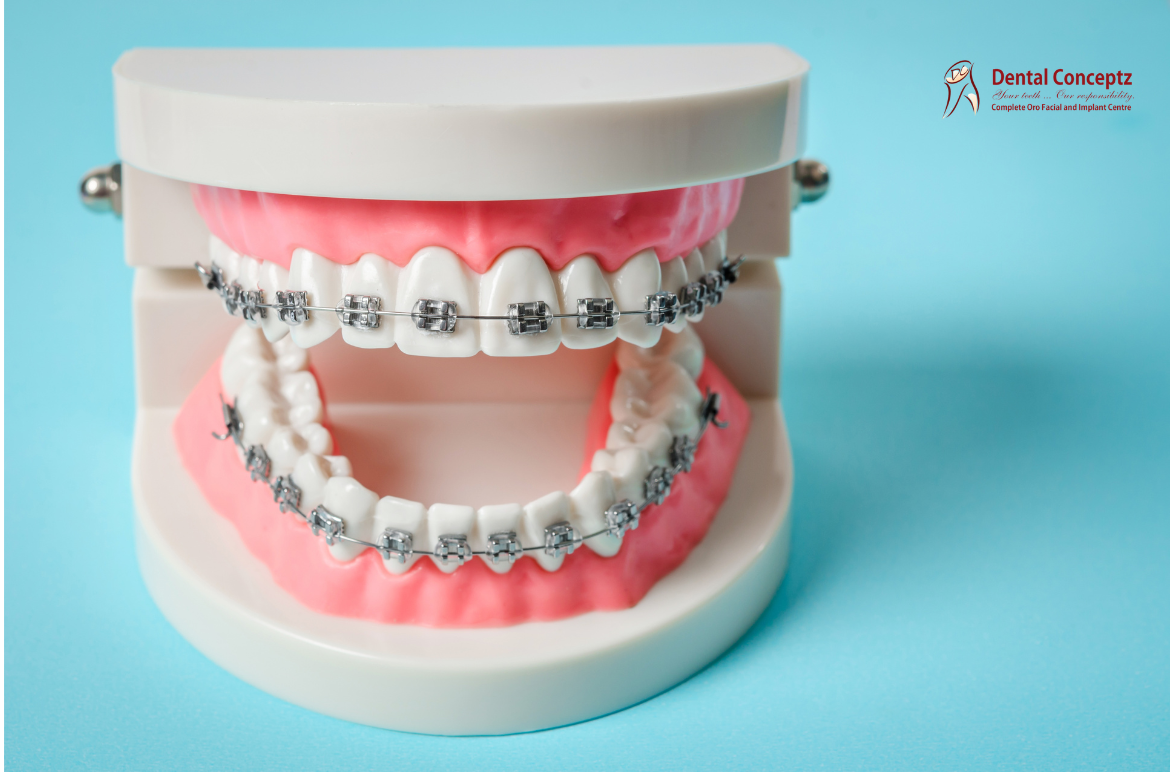
Metal braces are the classic choice and they remain highly effective for all types of misalignment, including the most complex cases. They allow very precise control over tooth movement and are generally the most accessible option in terms of cost. They work reliably across the full range of cases from mild to severe.
Ceramic braces function in the same way as metal braces, but use tooth-coloured brackets that are far less noticeable against the teeth. The treatment timeline is typically identical to that of metal braces. They are a popular choice for adults and older teenagers who want effective treatment with a more discreet everyday appearance.
Clear aligners are removable trays that work well for mild to moderate misalignment and are particularly popular with working adults. Because they are removable, patient compliance becomes the critical factor. If the trays are not worn for the recommended 20 to 22 hours per day, treatment will extend well beyond the estimated timeline sometimes by several months.
This factor is entirely within your control and it makes a bigger difference than most patients expect going in.
Attending every scheduled adjustment appointment keeps your treatment progressing at the planned pace. Missing appointments, delaying visits, or leaving broken brackets unrepaired creates gaps in the continuous pressure that is actively moving your teeth and those gaps add weeks, sometimes months, to your overall timeline. Looking after your braces properly, avoiding hard and sticky foods, and following your orthodontist's care instructions all contribute directly to staying on track and finishing treatment on time.
Some cases involve more than simply crowded or spaced teeth. Significant overbites, underbites, open bites, crossbites, and teeth that are rotated rather than simply displaced each add their own complexity to treatment. Your orthodontist will identify all of these factors during your initial assessment and factor them carefully into the estimated timeline they provide before treatment begins.
A Realistic Month-by-Month Picture of What to Expect
- In the first one to three months, the adjustment period begins. Your mouth is getting used to the hardware; your teeth may feel tender for a day or two after each adjustment appointment, and the first gradual movements are starting to take place. This is often the most physically uncomfortable phase of the whole journey but it gets noticeably easier as your mouth adapts.
- From three months to twelve months, significant progress is noticeable. It will be evident that your teeth are moving into a proper position. Gaps are gradually closing, crowding is lessening, and your smile will be changing in its appearance. This stage is quite encouraging for most people.
- From twelve to eighteen months, major alignment has been largely accomplished in most common cases. The general process of aligning the teeth in their desired locations has already been accomplished, and attention turns toward fine-tuning and making sure that both the upper and lower arches are functioning together properly.
- From eighteen months to thirty months or beyond, complex cases get solved and fine-tuned. For instance, if you have a crossbite, an excessive overbite, or any jaw problems that need more intricate treatment, that is what happens at this stage to make sure everything is stable enough before taking off the braces.
- After removal comes the retention phase, and this part is non-negotiable. Once braces come off, teeth have a natural tendency to drift back toward their original positions over time. Retainers either fixed behind the teeth or removable for night wear are prescribed to hold your teeth in their corrected positions while the bone around them fully stabilises. This is not optional extra care. It is a part of treatment that makes everything you went through last for the rest of your life.
What About Braces Cost in Bangalore?
Cost is one of the most common concerns people raise when they first start thinking about orthodontic treatment and it is a completely legitimate thing to want to understand before you commit to a treatment plan.
Brace price in Bangalore differs with respect to the kind of braces that have been chosen, the intricacies of the case, and also the duration of the treatment process. Metal braces are usually relatively affordable compared to the others, with the starting price being ₹25,000 for simple cases. Ceramic braces, which are less conspicuous compared to metal ones, tend to be slightly more expensive. On the other hand, the cost of a clear aligner is usually relatively high.
What is important to remember when thinking about cost is the long-term value of what you are investing in. Teeth straightening treatment done well, with proper retention maintained afterward, delivers results that can last decades. The cost per year of enjoying straight, properly aligned teeth and a corrected bite, when you calculate it over a ten or twenty-year period is far more manageable than the upfront figure suggests.
At Dental Conceptz, every patient receives a fully detailed treatment plan with clear and transparent cost information before any treatment begins. There are no hidden charges and no pressure to decide on the spot.
Why Choosing the Right Orthodontist in Bangalore Matters
Orthodontics cannot be treated like any other process wherein one orthodontist can replace another easily. The proficiency and experience of your orthodontist will play a vital role in determining how effective your treatment process will be, how comfortably you undergo treatment, and how long-lasting your outcome will be after your braces are removed.
While looking for an orthodontist in Bangalore, you should search for those who have specialist credentials in orthodontics or prosthodontics, practical experience in dealing with your case of malocclusion, a clear explanation of available options without coercion, and complete transparency regarding the process and its cost right from the first consultation itself.
At Dental Conceptz in Sahakarnagar and Jakkur, Bangalore, Dr. Namratha Umesh brings over 25 years of clinical experience in restorative and prosthetic dentistry, along with advanced international training in facial aesthetics and occlusal management. Every braces treatment in Bangalore delivered at our clinic is approached with the precision and personalisation that complex smile correction genuinely demands, because the goal is always teeth that function beautifully and a smile the patient is genuinely proud of.
The Bottom Line
There is no single answer to how long braces take, because every set of teeth is different, every bite is different, and every patient responds somewhat differently to treatment. What is consistent across virtually every case is this: the results are worth the wait.
Straighter teeth are easier to clean, which supports better long-term gum and bone health. A corrected bite reduces wear on tooth surfaces and can genuinely relieve chronic jaw discomfort. And the confidence that comes with a smile you are happy with — that is something patients consistently describe as life-changing rather than just cosmetic.
If you have been putting off finding out what your options are, a consultation is always the right first step. You will leave knowing exactly what your treatment would involve, how long it would realistically take, and what it would cost, with no obligation to commit until you are completely ready.
FAQ
1. How long do braces take to straighten teeth?
Braces usually take 12 to 36 months. Mild cases may finish within a year, while complex alignment issues can take longer.
2. How much do braces cost in Bangalore?
Braces cost depends on the type and case complexity. Metal braces are more affordable, while clear aligners and ceramic braces cost more.
3. At what age should you get braces?
Braces work best between ages 11 and 14, but adults can also straighten their teeth successfully at any age.
4. Do braces hurt?
Braces may cause mild discomfort for a few days after fitting or adjustments, but the soreness usually settles quickly.
5. What is the difference between metal braces and clear aligners?
Metal braces are fixed to the teeth and suit complex cases. Clear aligners are removable and less visible but need regular wear.
6. Can adults get braces in Bangalore?
Yes. Many adults choose braces or clear aligners to improve teeth alignment, bite issues, and smile appearance.
7.How do I know if I need braces or jaw alignment treatment?
Crowded teeth, bite problems, jaw pain, difficulty chewing, or uneven teeth alignment may indicate the need for orthodontic treatment.
8. What happens after braces are removed?
After braces, retainers are used to keep teeth in their new position and prevent them from shifting back.